Lorem ipsn gravida nibh vel velit auctor aliquet. Aenean sollicitudin, lorem quis bibendum auci elit consequat ipsutis sem nibh id elit dolor sit amet.



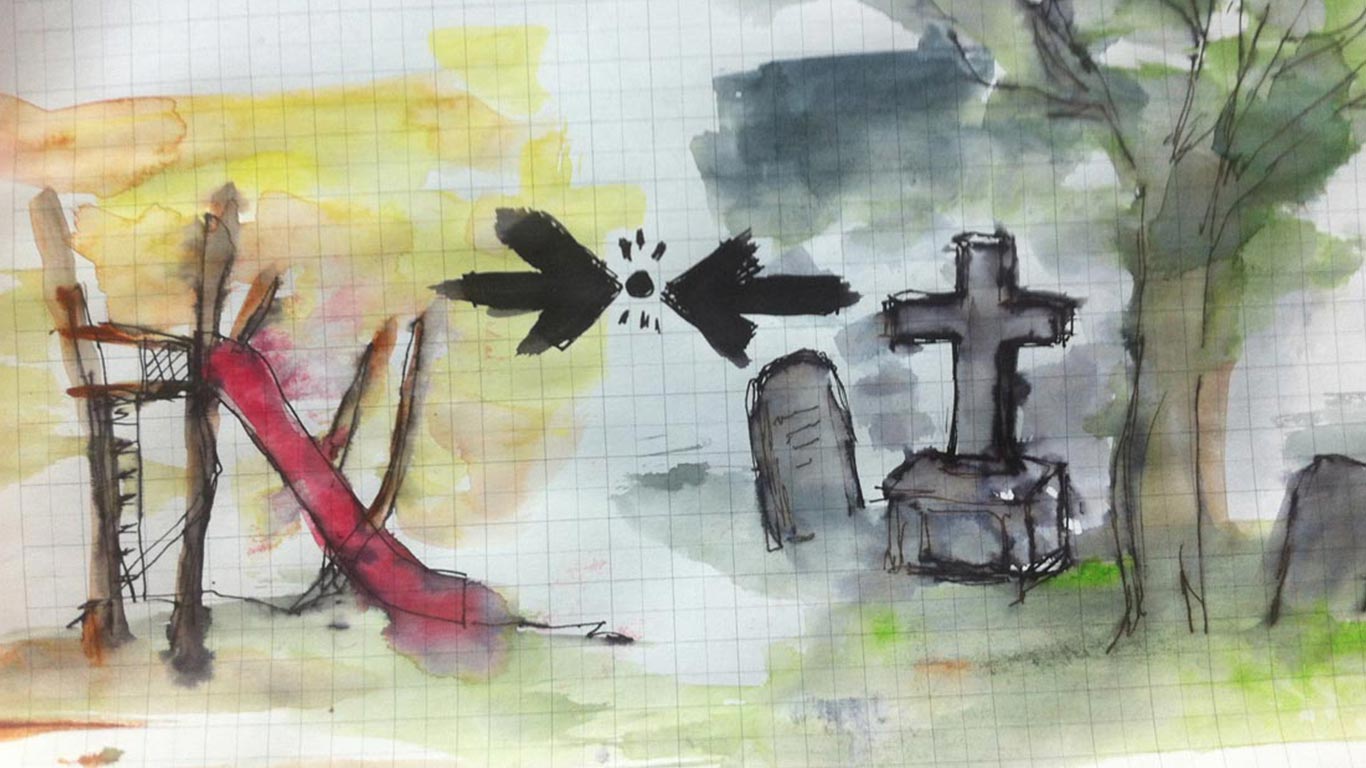
In meinen Streifzügen durch Städte bin ich auf zwei Orte gestoßen, die gesellschaftlich an entgegengesetzten Polen stehen – und doch etwas Gemeinsames haben: den Spielplatz und den Friedhof.
Beide sind öffentlich zugänglich, architektonisch gefasst, und erhalten ihre Bedeutung durch ihre Nutzung – oder durch das Ausbleiben derselben. Nur zu bestimmten Tageszeiten begegnet man dort Menschen. Der eine steht für den Anfang des Lebens, der andere für sein Ende. Beide betreffen jene, für die in unserer Leistungsgesellschaft oft kein Platz ist: Kinder und Alte.
Spielfried ist ein künstlerisches Konzept, das diese beiden Räume zu einem neuen Ort verschmilzt – als Rückzugsort für das, was wir gemeinhin als unproduktiv bezeichnen.
Es geht dabei nicht nur um effizientere Flächennutzung, sondern um eine kulturelle Vision: ein Denkmodell für die Stadt von morgen. Ein Raum, in dem Spiel, Erinnerung, Begegnung und Nachhaltigkeit gemeinsam gedacht und erlebt werden können.
Was hinterlasse ich den Kindern der Zukunft – und womit dürfen sie spielen?
Friedrich Schiller schrieb einst:
„Der Mensch entsteht aus Morast, und watet eine Weile im Morast, und macht Morast, und gärt wieder zusammen in Morast, bis er zuletzt an den Schuhsohlen seines Urenkels unflätig anklebt.“
Auch ohne diese düstere Worte bleibt die Erkenntnis: Das Leben ist ein Kreislauf.
Die beiden Enden zu verbinden – den Anfang und das Ende, das Spielen und das Trauern – erscheint fast zwingend. Die Vorstellung, meine letzte Ruhe auf einem Platz zu finden, auf dem gelacht, getobt und die Welt entdeckt wird, erfüllt mich mit einer eigentümlichen Freude.
Ein solcher SpielRuhRaum müsste beides vereinen: das Lebendige und das Vergängliche. Freude und Stille. Spiel und Erinnerung.
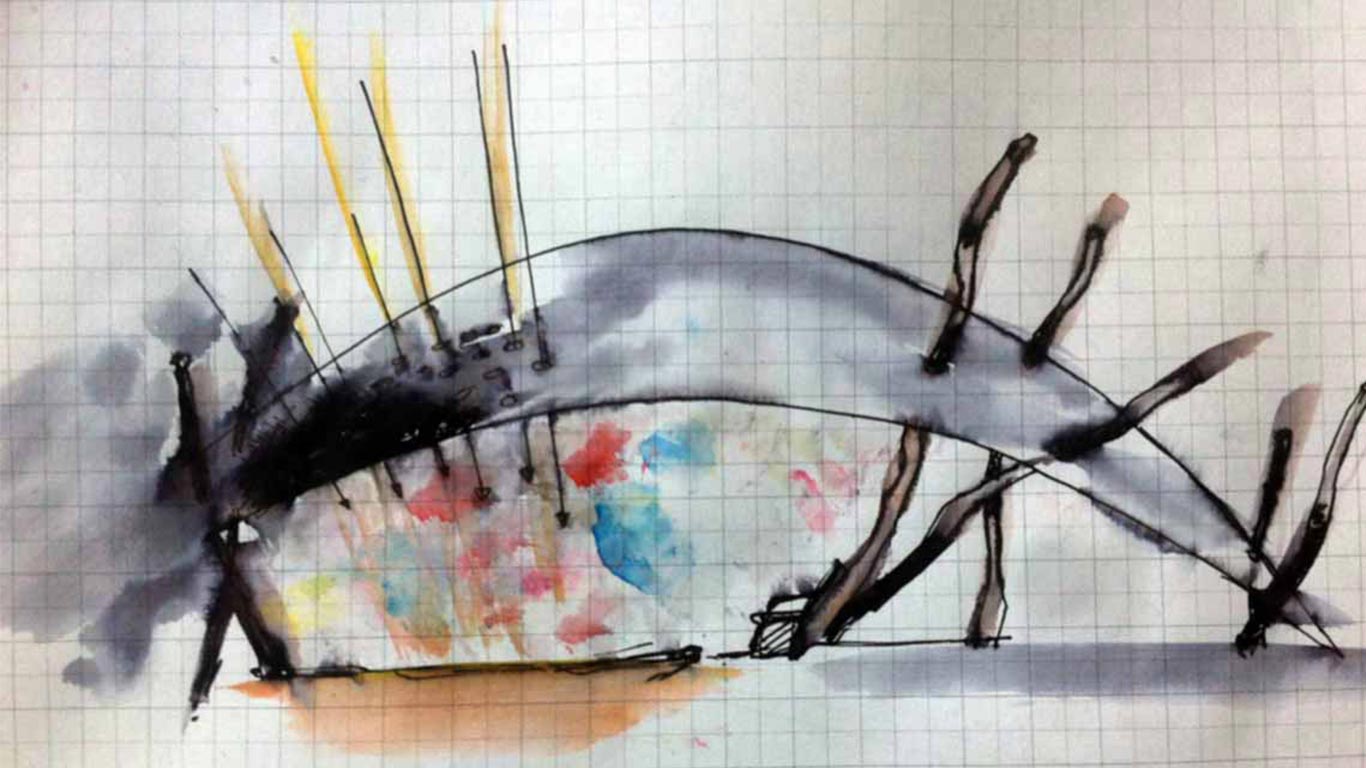
Im Zentrum steht eine Kuppel aus Beton, durchbrochen von kleinen Öffnungen, gefüllt mit Glaskristallen, die aus der Asche Verstorbener geschmolzen wurden. Das Licht fällt gefiltert in den Raum und lässt ihn je nach Tageszeit leuchten. Die Vergangenheit blickt auf die Zukunft.
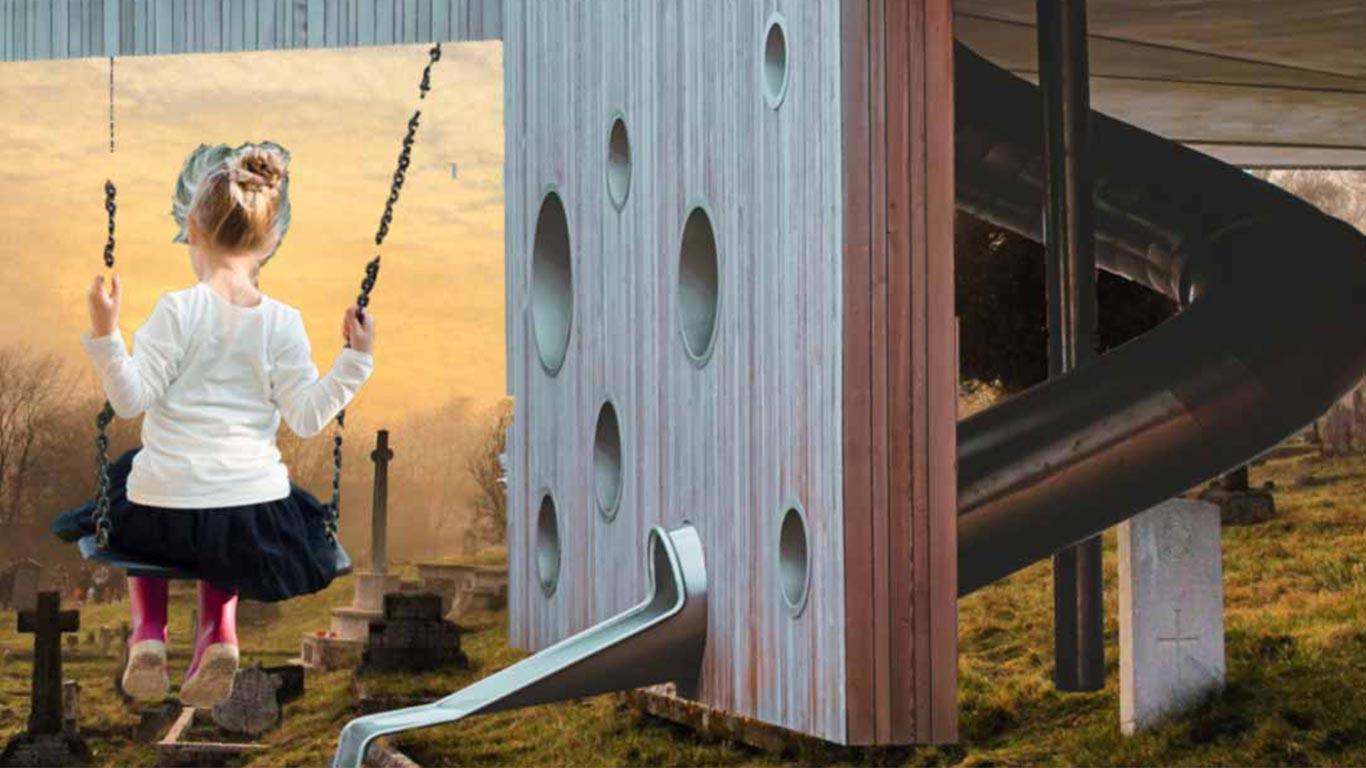
Der umliegende Bereich formt sich zu einer liegenden Acht – dem Symbol der Unendlichkeit. Zwischen Steinen als Grabzeichen entstehen Spielräume: Wasserläufe, Sand, Holzpalisaden. Kinder bauen, stauen, matschen. Sie spielen – mitten im Raum der Erinnerung.
Diese Dualität von Spielen und Trauern ist nicht einfach. Ein Ort wie dieser kann nur im Experiment entstehen – als kulturelle Suche danach, was wir wirklich brauchen.
Die Inschriften der Verstorbenen erscheinen nur über das Smartphone. So bleibt das Spiel frei von der typischen Friedhofsästhetik – und doch kann jeder sein Grab finden. Erinnerung und Gegenwart existieren nebeneinander, ohne sich zu behindern.
Einreichnung: Konzept für den Studentischen Kreativwettbewerb Treffpunkt Spielplatz – Begegnungsräume gestalten (Kategorie Soziokultur) – Baufi24
As a flâneur and phenomenologist, I have roamed through countless cities and discovered urban spaces of the most diverse kind. Where do people meet, where do they converse, and where are they alone? In my research, I’ve come across two places in the city that, while socially located at two opposite poles, have a few things in common. Both places are open to all people, have a clearly defined purpose, and are closed in form. We are talking about playgrounds and cemeteries. Both places get their raison d’être from their use, but are often deserted. Only at certain times of the day, on some days of the week, for an hour or two, can people be observed there. One built for the beginning of life, the other for the end, they stand for two poles in the lifetime of man. They also have in common that there is little room for both, the children and the old, in our achievement-oriented society. Two areas of life which, if one is honest, are repressed by most people and handed over to service providers and yet are or become of great importance to everyone. Thinking about the shortage of space in cities and the observation that both the playground and the cemetery are often not used, I developed the idea of the „play cemetery“. A connection of the two places for economic and cultural benefit alike. Just as a keep was a refuge in the medieval castle, the play keep is intended to be a retreat for the unproductive in the meritocracy.
Spielfried
The starting point is simple. We want to unite the playground and the cemetery and make them into a common place. It must be said at the outset that it is not just about increasing efficiency through better use of space in the city. Rather, it is about creating a meeting place where generations can meet and sustainability can be experienced. What will I leave to the future children, what will they have to and be allowed to play with?
Friedrich Schiller wrote:
„Man arises out of mire, and wades for a while in mire, and makes mire, and ferments together again in mire, until at last he sticks obscenely to the soles of his great-grandson’s shoes. That is the end of the song – the boggy circle of human destiny.“
Even without these thoroughly pessimistic words, life can be seen as a cycle. Connecting the two ends is only logical there. When I think about finding my final resting place in a playground where people romp, play and discover the world, the thought fills me with joy. This SpielRuhRaum would have to embody the joy that is life and yet have two sides.
Bringing together this duality of the two different determinations of play and mourning is not easy and ultimately you have to experiment with such a new place to see what happens.
Possible design:
My first idea for a concrete form was a dome that is made of concrete and has many small openings. These openings are filled with glass crystals of various colors, fired from the ashes of deceased people. Light falls through the dome, causing the open space below to glow with different light, depending on the time of day. The space that is created in this way can be interesting for the bereaved and mourners on the one hand, but can also develop its power as a play space. The past generations look down on the future ones. A true meeting place of the generations is created here. At the edge of the play cemetery there is a chapel where the funeral service takes place and the mourners can find a quiet place.
The dome could be extended and open into a valley, creating an architectural form that corresponds to a lying 8 as a symbol of infinity. In this valley could be many different rocks and stones that serve as gravestones. Between these stones and rocks are sandy areas, wooden palisades and in a channel flows water, which makes its way down. Children can divert the water, build and mud dams, and simply play among the stones. Children love mess and playgrounds where they can do something with their hands. Nowadays, playgrounds are often dead-designed, meeting the budget of the municipality but not the needs of children.
The question of aesthetics certainly plays a big role as well. Would it be possible to have all the grave inscriptions, appear only virtually. That is, one could recognize only with the smartphone, which stone stands for which deceased. This would have the advantage that the cemetery aesthetics does not prevent the boisterous game and yet everyone can find the grave.
Thus, the circle of generations is closed and the play graveyard becomes a real meeting place. For happiness and mourning. For the future and the past.
Submission: Concept for the student creative competition Treffpunkt Spielplatz – Begegnungsräume gestalten (category socioculture) – Baufi24